
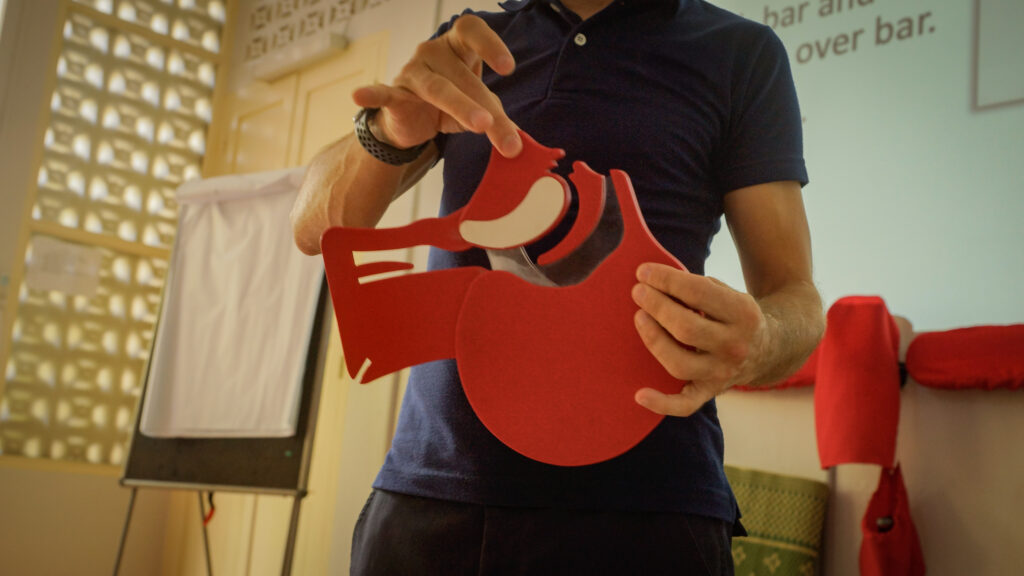
September 23–24, 2025 – Delivered by Laos Assistance
We at Laos Assistance are pleased to report the successful completion of a two‑day first‑aid training session held on 23–24 September 2025, in collaboration with the international development agency GIZ. This session forms part of a broader training series planned over the next six months, covering GIZ staff both local and expatriate, across five provinces in Laos.
GIZ, also known as the Deutsche Gesellschaft für Internationale Zusammenarbeit GmbH, is a German government‑owned enterprise working in international cooperation for sustainable development, active in more than 130 countries.
For this initiative in Laos, GIZ engaged Laos Assistance to design and deliver a practical first‑aid training curriculum tailored to the mix of local and expatriate personnel working in multiple provinces.
Training Structure & Participants
Over the two days:
• A total of 15 participants attended — a mix of Laos‑based local staff and expatriate team members.
• The format comprised theory sessions in first aid fundamentals, and practical, hands‑on training using mannequins, first‑aid tools such as bandages and splints, plus role‑play scenarios to replicate real‑world incidents.
• The teaching team consisted of one main trainer, supported by two additional trainers, to ensure small‑group supervision during the practical modules.
What We Covered
The training was structured to provide a strong balance between essential theory and hands-on experience, ensuring participants gained both knowledge and confidence to act in emergencies. A core focus was placed on prioritised trauma assessment, following internationally recognised frameworks adapted to field realities in Laos.
Key modules included:
• Initial approach and scene safety, followed by structured patient assessment using the C-ABCDE method:
• C – Catastrophic bleeding: Immediate identification and control of life-threatening external haemorrhage using pressure, bandages, or tourniquets.
• A – Airway: Ensuring the airway is clear and protected.
• B – Breathing: Assessing breathing effectiveness and providing support if needed.
• C – Circulation: Checking pulse, controlling non-catastrophic bleeding, and managing shock.
• D – Disability: Quick neurological assessment (consciousness, pupil response).
• E – Exposure & Environment: Exposing injuries while preventing heat loss or environmental harm.
• Basic Life Support (BLS): CPR, recovery position, and airway management techniques
• Wound care & bleeding control: Hands-on use of pressure dressings, gauze, and emergency bandages
• Fracture management: Applying splints, immobilising limbs, and safe casualty handling
• Practical scenarios and role plays: Simulated incidents (road accidents, falls, unconscious patient response) to reinforce decision-making under pressure
• Use of training mannequins and field-grade first aid tools for realistic simulations
This training enabled participants to respond confidently to emergencies with a systematic, evidence-based approach, tailored to the kind of remote and urban incidents they may face during their work in Laos.
Outcomes & Next Steps
The training concluded smoothly, with participants actively engaging and demonstrating practical skills in the hands‑on sessions. Feedback was positive, highlighting the value of realistic role‑plays and equipment‑based practice rather than purely lecture‑based training.
This session is the first of a series: over the coming six months, Laos Assistance will roll out equivalent training modules in the remaining four provinces for all GIZ staff in Laos. The aim is to ensure consistent baseline first‑aid competency across the entire workforce, supporting GIZ’s operational safety strategy in remote field settings.
Why This Matters
For organisations working in remote or challenging environments—whether humanitarian, development, filming, or industrial operations—having staff who are well‑prepared in first aid is indispensable. Through realistic training that bridges theory and practice, we at Laos Assistance help elevate preparedness, enhance safety culture and reduce risk across in‑field operations.